
Services
Electrical Preconstruction
H&M Electric's preconstruction team turns an early concept into a number you can build to. Three decades of self-performed work across Washington means our budgets, schedules, and constructability calls come from crews who have actually installed the scope — not from a spreadsheet.
Budgets that hold, from concept to construction documents
Preconstruction is where a project's budget is really set. The choices made before a drawing is finished — service size, distribution topology, gear selection, routing strategy — drive far more cost than anything decided in the field later. H&M's preconstruction team engages at the concept stage and builds the electrical budget up as the design matures, so the owner is never surprised by the number that lands on the construction documents.
We produce conceptual estimates from early program information, then progressively refine them at each design milestone — schematic, design development, and construction documents — as scope solidifies. Each pass reconciles against the last so the owner can see exactly how and why the number moved. That transparency is what turns an estimate into a budget the whole team trusts.
Because we self-perform the work we price, our numbers reflect real labor productivity, real material lead times, and real field conditions. A budget grounded in installation experience is a budget that holds through buyout and construction.
Detailed estimating and bid strategy
As documents develop, our estimators produce detailed, quantity-driven takeoffs of the entire electrical scope — feeders, branch, gear, lighting, low-voltage pathways, and specialty systems. Every line traces back to the drawings and specifications, so the estimate is auditable and the assumptions are explicit rather than buried.
We build bid strategy around where the risk and opportunity actually sit. That means identifying scope gaps between the electrical, mechanical, and low-voltage packages before they become change orders, testing alternates and unit pricing, and structuring the proposal so the owner and general contractor can compare apples to apples. Clear inclusions and exclusions up front prevent the disputes that erode a project later.
Value engineering and constructability review
Value engineering earns its name when it protects the outcome. H&M looks for the routing, gear selection, and sequencing that deliver the same performance for less cost or less schedule — a transformer relocation that shortens feeders, a distribution approach that reduces gear, a prefabrication strategy that pulls weeks out of the field. We bring these options forward with the cost and schedule impact attached, so decisions are made on facts, not guesses.
Constructability review runs in parallel. Our field-experienced team reads the design the way it will be built: Are the electrical rooms sized for the gear and its working clearances? Do the pathways actually fit above the ceiling alongside every other trade? Is the sequence buildable given the site logistics? Catching these conflicts on paper is dramatically cheaper than discovering them in the field.
The result is a design that is not just code-compliant but genuinely buildable, priced, and coordinated before the first conduit is bent.
Scheduling and long-lead procurement planning
Electrical scope frequently sits on the critical path, and the gear that drives it — switchboards, switchgear, transformers, generators, and paralleling equipment — can carry long and volatile lead times. H&M's preconstruction work includes a procurement plan that identifies these items early and maps their release dates against the construction schedule, so nothing stalls the job waiting on equipment.
We build the electrical activities into the overall project schedule with the general contractor, sequencing rough-in, gear setting, terminations, and energization around the realities of the site and the other trades. Where early release or pre-purchase of long-lead equipment protects the schedule, we flag it while there is still time to act.
De-risking healthcare, critical, and public projects
The stakes of preconstruction rise sharply on healthcare, critical-environment, and public work. A hospital addition has to phase around a facility that never closes; a data or critical facility has redundancy and power-quality requirements that ripple through the whole distribution design; a public building answers to a hard budget and public accountability. Getting the plan right before construction is what keeps these projects on track.
With more than twenty years in healthcare and critical environments, H&M brings preconstruction planning that accounts for essential-systems requirements, infection-control phasing, occupied-facility outages, and inspection readiness from the start. We plan the cutovers, the temporary power, and the commissioning path as part of the budget and schedule — not as afterthoughts discovered during construction.
That early rigor is how preconstruction removes risk: the surprises get found on paper, priced, and solved before they can threaten the project's cost, schedule, or the operation it serves.
Preconstruction capabilities
H&M's preconstruction team pairs disciplined estimating with the field judgment of a contractor that self-performs its work.
Conceptual estimating
Early budgets built from program information and refined at every design milestone, so the owner sees a reliable number long before construction documents.
Detailed estimating & bid strategy
Quantity-driven takeoffs traceable to the drawings, with clear inclusions, alternates, and scope-gap analysis across the electrical, mechanical, and low-voltage packages.
Value engineering
Routing, gear, and sequencing options that cut cost or schedule without compromising performance, each presented with its cost and schedule impact.
Constructability review
Field-experienced review of electrical room sizing, pathway coordination, working clearances, and sequence so the design is buildable before it is bid.
Schedule & long-lead planning
Electrical activities sequenced into the master schedule, with switchgear, transformers, and generators identified early and released ahead of the crunch.
Owner & design-team collaboration
Early engagement with owners, general contractors, and engineers to align budget, scope, and schedule while decisions are still inexpensive to change.
- Serving Washington since
- 1993Serving Washington since
- Self-perform field experience behind every number
- 30+ yrsSelf-perform field experience behind every number
- In healthcare & critical environments
- 20+ yrsIn healthcare & critical environments
- Cost and schedule visibility, before documents finalize
- EarlyCost and schedule visibility, before documents finalize
Related work
All projects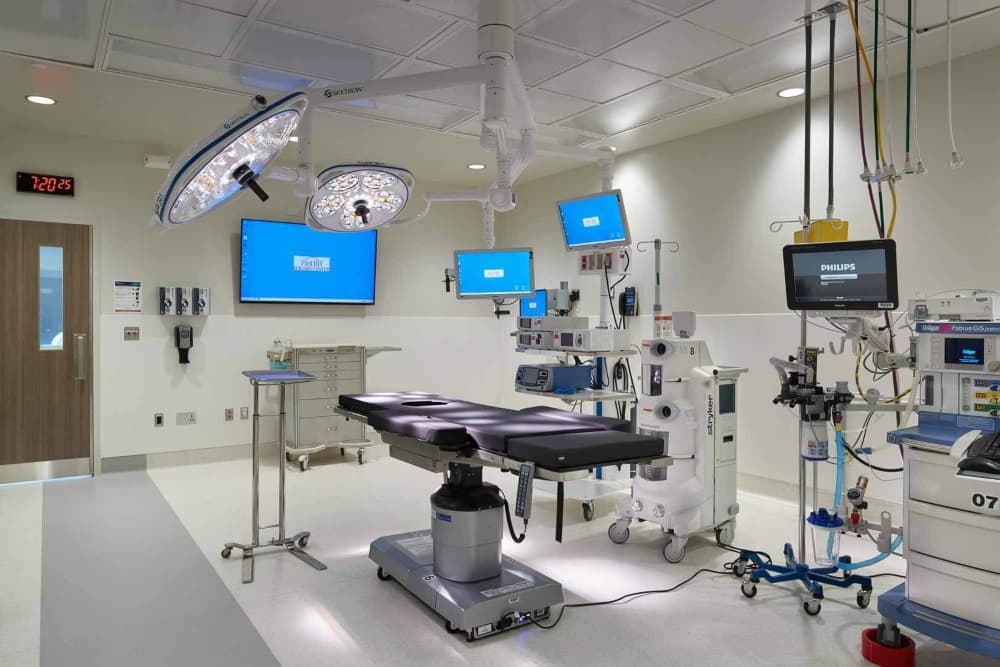 Healthcare & Critical Environments
Surgery center — operating rooms, PACU & sterile core
Fully equipped operating rooms with surgical booms and integrated power, plus post-anesthesia recovery (PACU) and a sterile processing core — the essential electrical systems a surgical suite depends on.
 Technology & Evolving Industries
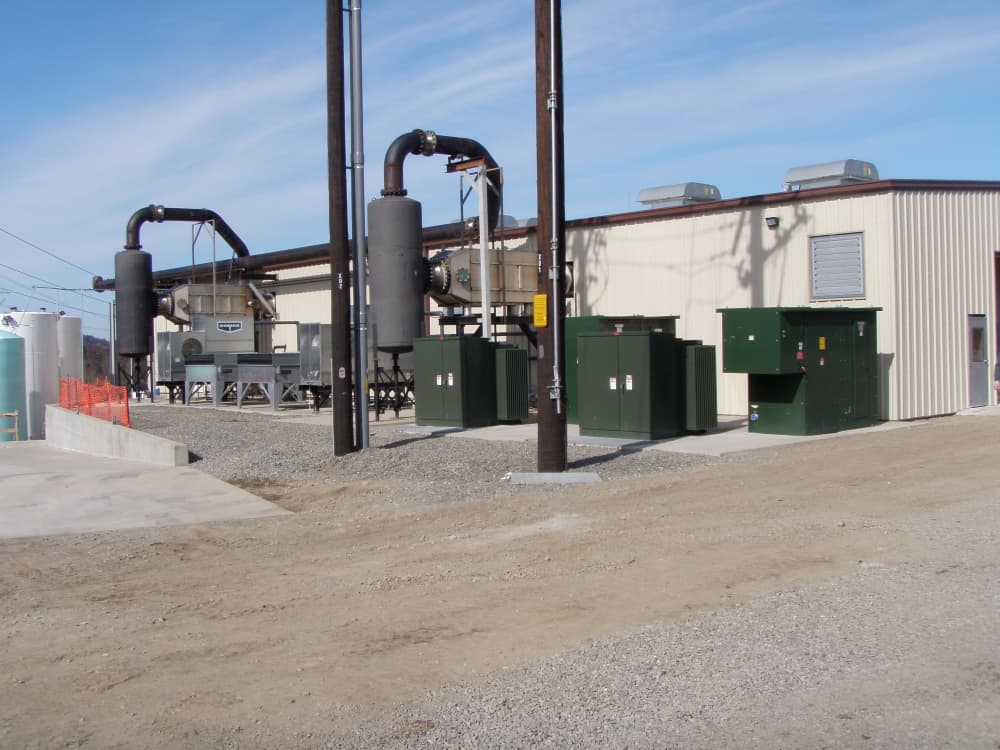
Landfill-gas bio-energy facility
Design-build electrical for a landfill-gas-to-energy facility — pad-mounted transformers, gas-processing power, and controls for a specialized industrial environment.
 New Construction & Design-Build
Landmark gallery — new construction & feature lighting
New-construction electrical for a landmark Seattle Center gallery, including the specialized feature lighting behind large-scale glass installations, indoors and out.
Frequently asked
Questions buyers ask us
What is electrical preconstruction?
Electrical preconstruction is the planning work done before construction begins: conceptual and detailed estimating, value engineering, constructability review, and schedule and procurement planning. It sets a reliable budget and a buildable plan so the project starts with the risks already identified and priced.
How does preconstruction give an owner budget certainty?
H&M builds the electrical budget from real construction cost as the design develops, refining it at each milestone and reconciling every change. Because we self-perform the work we price, the number reflects actual labor, material lead times, and field conditions — so it holds through buyout and construction.
What is a constructability review?
A constructability review reads the design the way it will actually be built — checking that electrical rooms fit the gear and its clearances, that pathways coordinate with other trades, and that the sequence is buildable. Catching these conflicts on paper is far cheaper than discovering them in the field.
Does value engineering mean cutting quality?
Not the way H&M practices it. Our value engineering finds routing, gear, and sequencing that deliver the same performance for less cost or schedule, and we present each option with its cost and schedule impact so the owner decides on facts rather than guesses.
Why does long-lead procurement planning matter?
Switchgear, transformers, generators, and paralleling equipment can carry long lead times that put electrical scope on the critical path. Preconstruction identifies these items early and maps their release dates against the schedule, so the job never stalls waiting on equipment.
How does preconstruction de-risk healthcare and public projects?
On healthcare, critical, and public work, H&M plans essential-systems requirements, infection-control phasing, occupied-facility outages, and the commissioning path as part of the budget and schedule. Finding and solving those issues on paper keeps the project's cost, schedule, and operation protected once construction starts.
Bid invitations & estimates
Bring H&M in early — and start with a budget you can build to.
We work with general contractors, healthcare facilities, developers, and property managers across Washington. Send plans and we'll respond quickly.